


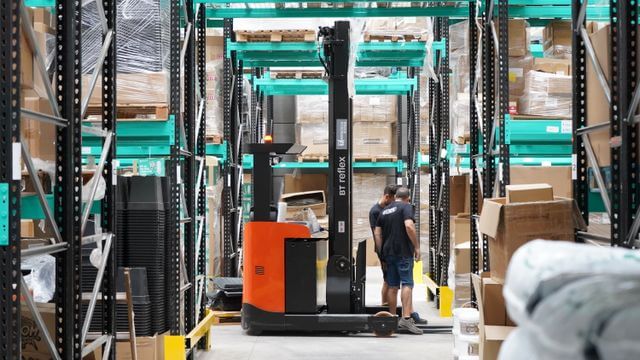
Growth is a goal for nearly every business, but successful scaling requires more than just increasing sales. As order volumes rise, inventory expands, and customer expectations grow, operational processes must evolve to support increased demand. For many organizations, warehouse operations are among the first areas where growth creates significant challenges.
Manual workflows that work effectively for smaller operations often become bottlenecks as businesses scale. Delayed order fulfillment, inventory inaccuracies, inefficient labor utilization, and limited visibility can slow growth and increase operational costs.
To overcome these challenges, businesses are increasingly investing in warehouse automation. Organizations implementing advanced warehouse management software are creating more efficient, scalable operations that can support long-term growth without sacrificing service quality.
Sustainable growth depends on systems that can scale alongside the business.
Why Scaling Creates Warehouse Challenges
As businesses grow, warehouse complexity increases significantly.
Higher sales volumes typically lead to:
- More inventory to manage
- Increased order fulfillment demands
- Greater shipping activity
- Additional warehouse staff
- More supplier relationships
- Higher customer expectations
Without efficient systems in place, these changes can strain warehouse operations and create performance issues that limit growth.
Many organizations discover that manual processes become increasingly difficult to manage as operational demands increase.
Manual Workflows Cannot Scale Efficiently
Warehouses that rely heavily on spreadsheets, paper-based processes, or disconnected systems often experience growing inefficiencies as order volume rises.
Common challenges include:
| Warehouse Challenge | Business Impact |
| Manual inventory tracking | Increased errors and stock discrepancies |
| Paper-based workflows | Slower processing times |
| Limited operational visibility | Delayed decision-making |
| Inefficient labor allocation | Rising operational costs |
| Fulfillment bottlenecks | Customer dissatisfaction |
As warehouse activity expands, these inefficiencies can quickly affect profitability and customer experience.
Automation Improves Operational Efficiency
Warehouse automation helps businesses streamline workflows and eliminate many of the repetitive tasks that slow operations.
Modern systems can automate:
- Inventory updates
- Barcode scanning
- Receiving processes
- Order routing
- Shipment tracking
- Reporting and analytics
Organizations that use warehouse automation achieve greater accuracy while reducing the time required to complete routine tasks.
This allows warehouse teams to process more orders without a proportional increase in labor requirements.
Automation helps businesses do more with existing resources while maintaining operational quality.
Better Inventory Accuracy Supports Growth
Inventory management becomes increasingly complex as businesses expand product offerings and warehouse capacity.
Inaccurate inventory data can result in:
- Stock shortages
- Overselling products
- Delayed shipments
- Excess inventory carrying costs
- Poor customer experiences
Warehouse automation improves inventory control through real-time tracking and automated inventory updates.
Businesses gain more accurate visibility into stock levels while reducing the risk of costly inventory errors.
Benefits include:
- Faster inventory counts
- Improved stock accuracy
- Better replenishment planning
- Reduced inventory discrepancies
- More reliable order fulfillment
Accurate inventory information becomes essential as organizations scale operations across multiple locations or product categories.
Faster Order Fulfillment Improves Customer Satisfaction
Customer expectations continue rising across nearly every industry.
Businesses are increasingly expected to provide:
- Faster shipping
- Accurate delivery estimates
- Reliable order fulfillment
- Real-time order updates
Manual warehouse processes often struggle to support these expectations at scale.
Automation helps accelerate fulfillment by streamlining picking, packing, and shipping workflows. Orders move through the warehouse more efficiently, reducing delays and improving delivery performance.
Faster fulfillment not only improves customer satisfaction but also helps businesses remain competitive in increasingly crowded markets.
Labor Optimization Reduces Growth Costs
Labor represents one of the largest operational expenses for most warehouses.
As businesses grow, simply adding staff may not be the most efficient solution to increased demand.
Warehouse automation improves workforce productivity by reducing repetitive manual tasks and helping employees work more efficiently.
Benefits include:
- Faster task completion
- Reduced travel time within warehouses
- Better workload balancing
- Improved picking accuracy
- Increased overall productivity
This allows organizations to support growth while controlling labor-related costs.
Real-Time Visibility Improves Decision-Making
Growing businesses require accurate operational data to make informed decisions.
Warehouse automation provides real-time visibility into:
- Inventory levels
- Order status
- Shipment activity
- Workforce performance
- Fulfillment metrics
This information helps managers identify bottlenecks, optimize workflows, and allocate resources more effectively.
Organizations with stronger operational visibility are better positioned to adapt quickly as business needs evolve.
Better Freight Coordination Supports Scalability
As order volume increases, transportation and warehouse operations become more interconnected.
Businesses using integrated freight management software can improve coordination between warehouse teams and logistics providers while maintaining greater visibility across the shipping process.
Improved freight coordination helps organizations:
- Manage inbound inventory efficiently
- Reduce shipment delays
- Improve carrier communication
- Enhance supply chain visibility
- Support faster order fulfillment
A connected logistics strategy becomes increasingly important as businesses expand into new markets and regions.
Data Analytics Drive Continuous Improvement
Warehouse automation platforms generate valuable operational insights that help businesses improve performance over time.
Managers can track key metrics such as:
| Performance Metric | Business Benefit |
| Order fulfillment speed | Faster customer deliveries |
| Inventory accuracy | Reduced operational errors |
| Labor productivity | Better workforce utilization |
| Warehouse throughput | Increased operational capacity |
| Shipping performance | Improved customer satisfaction |
These insights enable businesses to identify opportunities for optimization and support long-term growth strategies.
Warehouse Automation Is a Foundation for Growth
Scaling a business requires operational systems that can adapt to increasing complexity without creating inefficiencies.
Warehouse automation provides the visibility, accuracy, and workflow efficiency organizations need to support growth while maintaining service quality and operational control.
Businesses that continue relying on manual warehouse processes may find it difficult to keep pace with rising demand, increasing customer expectations, and expanding supply chain requirements.
Organizations investing in warehouse automation are building stronger operational foundations that support sustainable growth, improved productivity, and long-term competitiveness.
In today’s fast-moving business environment, warehouse automation is no longer simply a technology upgrade. It is an essential strategy for scaling successfully.
