


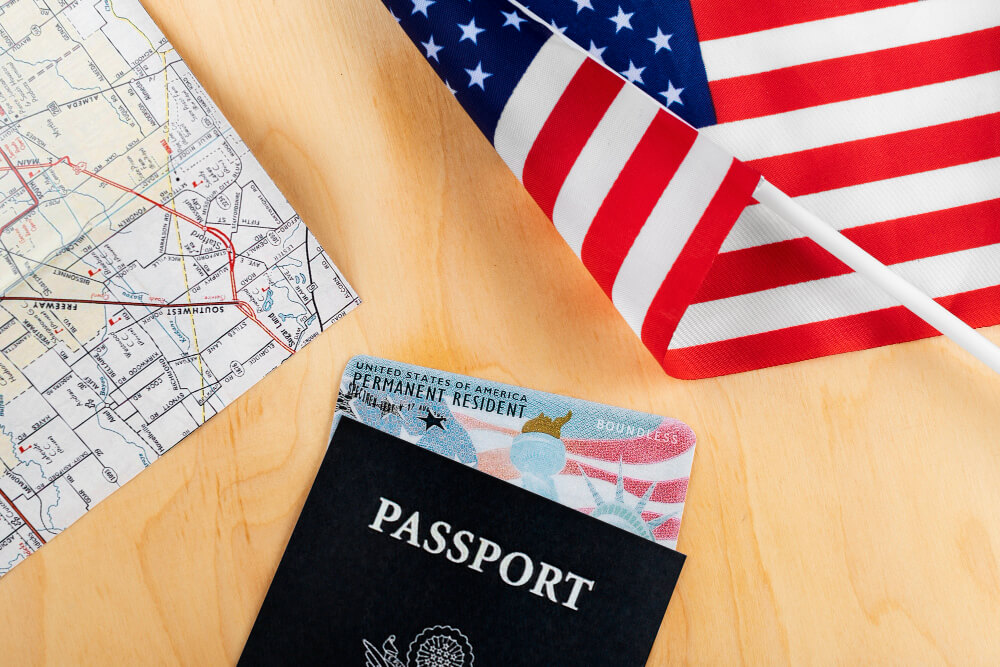
For individuals who obtained a Green Card through marriage and had been married for less than two years at the time, permanent resident status comes with a condition attached — a two-year period during which USCIS verifies the marriage was genuine. To convert that conditional status into full permanent residence, a specific petition must be filed before the card expires. Form I-751, Petition to Remove Conditions on Residence, is that filing. Understanding when to file, what to include, and what happens after submission is essential for anyone holding a conditional Green Card.
What Form I-751 does
Form I-751 is the petition used to remove the conditions attached to a two-year conditional Green Card issued through marriage. USCIS attaches conditions to Green Cards granted to individuals who had been married for less than two years when they became a lawful permanent resident — a measure that allows the agency to confirm the marriage was entered into in good faith rather than solely for immigration purposes.
An approved Form I-751 results in the issuance of a standard 10-year Green Card, converting conditional permanent residence to full permanent residence. Children who received conditional resident status on the same day as the principal petitioner — or within 90 days after — may be included in the same petition. Children whose conditional status was granted outside that window must file their own Form I-751.
When to file
For joint filers — those filing together with their spouse — Form I-751 must be submitted during the 90-day window immediately before the conditional Green Card’s expiration date. USCIS will reject petitions filed before this window opens. The filing window can be calculated by looking at the “Card Expires” date on the front of the card and counting back 90 days.
Missing the filing deadline does not automatically end a conditional resident’s status, but a late filing requires a written explanation demonstrating that the delay was caused by extraordinary circumstances beyond the applicant’s control.
For those filing without a spouse — due to divorce, the death of a spouse, abuse, or extreme hardship — the 90-day window does not apply. In those circumstances, the petition may be filed at any time after receiving conditional resident status, provided the petitioner has not been removed from the United States.
What to include
Form I-751 may be filed online through a myUSCIS account or by mailing a paper form to the appropriate USCIS lockbox address, which varies by state of residence. Every petition must include copies of the front and back of the conditional Green Card for the petitioner and any included children. Beyond that, the specific documentation required depends on the basis for the petition.
For joint filings, evidence of a bona fide marriage is the central evidentiary requirement. Documentation frequently submitted includes:
- Joint bank account statements or other shared financial records
- Federal and state tax returns filed jointly
- Lease or mortgage agreements showing joint occupancy
- Utility bills or insurance policies listing both spouses
- Birth certificates of children born during the marriage
- Photographs of the couple together
- Affidavits from at least two individuals with personal knowledge of the relationship
For petitions filed without a spouse, documentation varies by the basis for the waiver — death certificates, final divorce decrees, police reports, court records, or medical records may be required depending on the circumstances.
Any arrests, charges, or convictions in the petitioner’s history should be accompanied by relevant court orders or official disposition documents.
Filing fees and processing times
The filing fee for Form I-751 is $750 for paper submissions and $700 for online filings, as of current USCIS fee guidance. Fees are subject to change and should be verified before submitting. USCIS does not accept personal checks, business checks, money orders, or cashier’s checks for paper filings under standard circumstances. Card payments are made using Form G-1450, and direct bank withdrawals using Form G-1650.
Processing times for Form I-751 vary by service center and case type. Most petitions are currently taking approximately 29.5 to 35.5 months to be decided, per USCIS processing time data. Upon acceptance of the petition, USCIS issues a receipt notice that automatically extends the conditional resident’s status for 48 months beyond the Green Card’s expiration date. During that period, the expired Green Card and receipt notice together serve as proof of lawful status, allowing the petitioner to continue living and working in the United States.
What comes after approval
Once Form I-751 is approved, USCIS mails a standard 10-year Green Card to the petitioner, formally removing the conditions on residence. At that point, the individual holds full lawful permanent resident status and may, depending on their circumstances, begin working toward eligibility for U.S. citizenship.
The value of legal guidance
The consequences of a missed I-751 filing deadline — or a poorly documented petition — can be significant, including loss of resident status. For petitioners in straightforward joint filing situations, the process is manageable with careful attention to the timeline and evidence requirements. For those filing without a spouse, or with complex circumstances in their background, working with experienced immigration counsel is frequently cited as an effective way to ensure the petition is prepared correctly and submitted with the strongest possible evidentiary foundation.
