


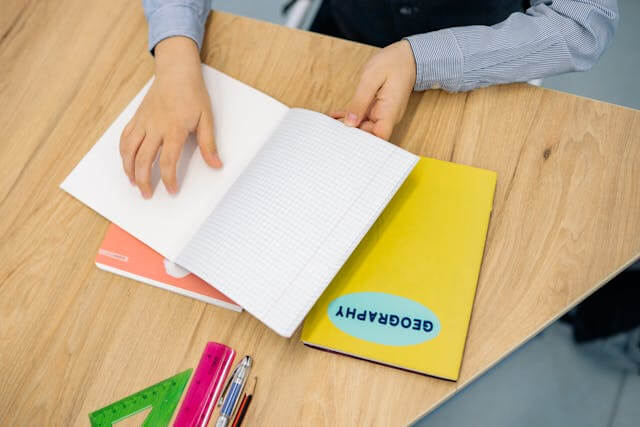
As pupils move through school, the way they use exercise books changes. In the early years, books are often used for short tasks, handwriting practice and simple recording. By Key Stage 2 and into secondary school, pupils are expected to plan, organise and review more of their own work.
That is one reason many schools use A4 Exercise Books for subjects where pupils need more space to think, structure ideas and build work over time.
Giving Pupils Space to Develop Their Answers
A larger page can be useful when pupils are learning how to move beyond short responses. Instead of writing a few lines and stopping, they have room to plan an answer, add supporting points, respond to feedback and make corrections in the same place.
This matters in lessons where pupils are being taught how to explain their thinking. In English, it might mean planning a paragraph before writing it. In science, it could mean recording a prediction, method, results and conclusion without spreading the task across too many pages. In geography or history, it gives pupils room to organise evidence before writing a final response.
The extra space does not make the work better on its own, but it gives pupils a better format to work with.
Helpful for Revision and Looking Back
Exercise books are not just used during lessons. Pupils often return to them later for homework, revision and assessment preparation. A4 books can make this easier when work is set out clearly and related notes stay together.
For older pupils, this can be useful when building topic knowledge over several weeks. A page can hold diagrams, notes, examples and corrections in a way that is easier to follow later. This is especially helpful in subjects where pupils need to revisit previous learning before a test or mock exam.
A book that is easy to look back through can support better study habits. It also helps teachers see how a pupil’s understanding has developed over time.
A Better Fit for Mixed Lesson Tasks
Many lessons are no longer just a page of writing. Pupils may be asked to complete a starter task, annotate a source, draw a diagram, answer questions, correct misconceptions and add a summary at the end.
In a smaller book, that can quickly become crowded. An A4 format gives teachers more flexibility when setting tasks and gives pupils more room to respond properly.
This is particularly useful for:
- Science practical work
- Geography case studies
- History source analysis
- English planning and drafting
- Design and technology notes
- SEN support and intervention work
- Homework projects
Presentation Without Making It Complicated
Presentation matters, but pupils should not have to fight with the page to keep work neat. A larger book can make it easier to use headings, leave spaces, draw tables and separate different parts of a task.
This can be helpful for pupils who struggle with organisation. Clearer page space can make work feel less crowded and give them more control over how they set it out. Teachers can also use the space for marking, feedback and next steps without squeezing comments into the edge of the page.
Choosing A4 Books With Purpose
A4 books are most useful when schools choose them for the right reason. They are not always needed for simple written tasks or subjects where pupils only need short notes. They do take up more storage space, so it makes sense to use them where the larger format adds value.
Before ordering, schools may want to think about:
- The subject and type of work being completed
- The age group using the books
- The ruling needed, such as lined, plain or squared
- Cover colours for subjects or year groups
- How the books will be stored and carried
- How often pupils will need to refer back to their work
Final Thoughts
A4 exercise books are useful when pupils need more than a small space to write. They can support planning, revision, practical work and longer responses, especially as pupils become more independent in the way they record and organise learning.
For teachers, the larger format can also make work easier to follow, mark and return to later. Pupils have more room to show their thinking, add corrections and keep related notes together, which can be helpful in subjects where work builds over several lessons.
For schools, the key is to use them where the larger page size genuinely helps. Matched with the right ruling and cover colour, they can be a practical part of everyday classroom organisation, supporting clearer presentation, simpler stock control and more consistent routines across subjects or year groups.
